
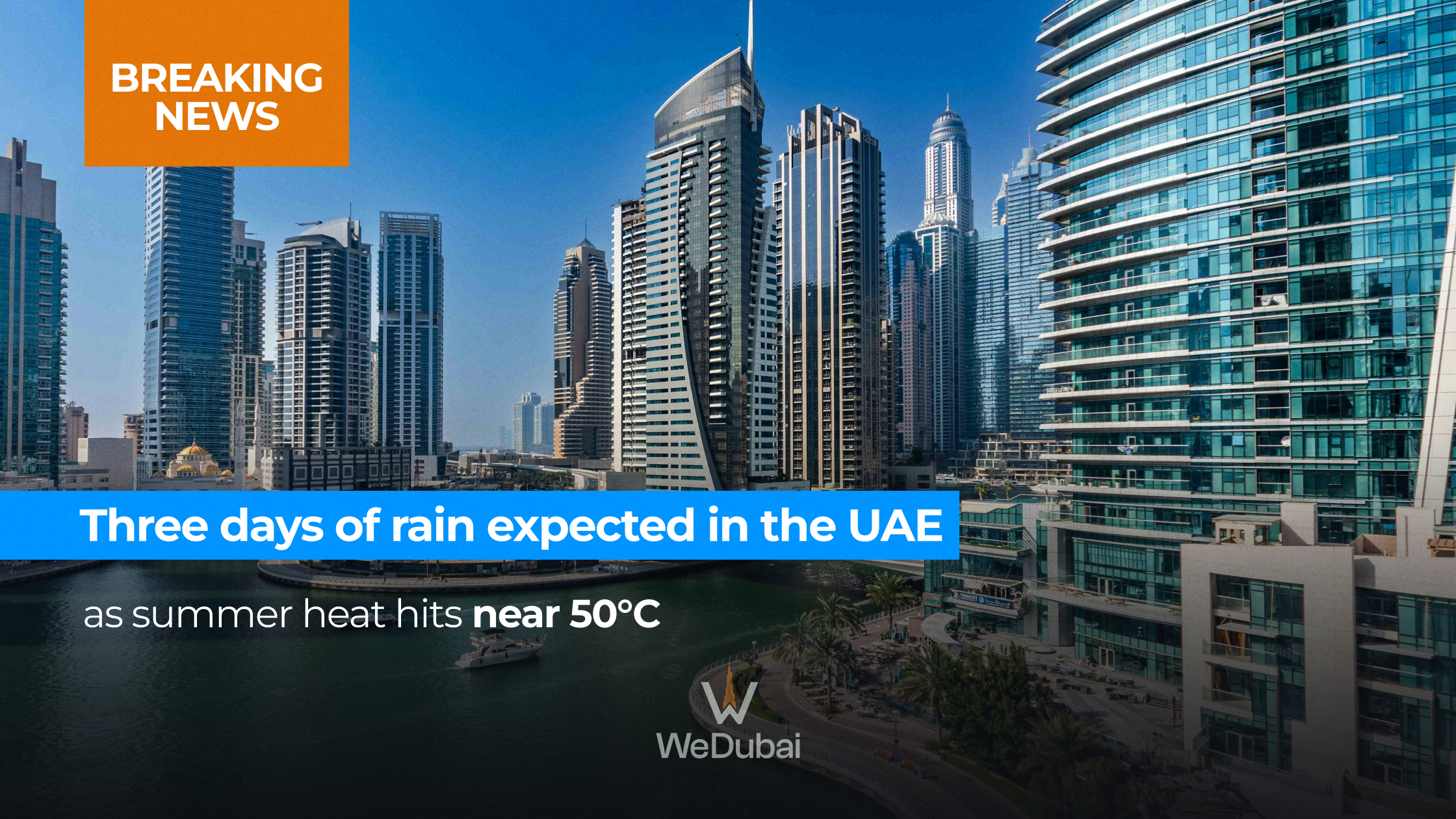
DUBAI — As the UAE enters the high summer of 2026, the local property market is analyzing a fascinating weather pattern that directly highlights the structural quality of the nation's built environment.
The National Centre of Meteorology (NCM) has confirmed a three-day forecast of convective rainfall across the country, arriving exactly as interior desert temperatures peak.
On Saturday, June 20, Sweihan in Al Ain recorded a blistering maximum temperature of 49.4°C, illustrating the extreme thermal forces currently at play.
For institutional investors, property developers, and high-end homeowners, this intersection of intense mid-summer heat and sudden downpours serves as a live, real-world test of the architectural integrity, sustainable engineering, and proactive asset management standards that define Dubai and the wider Emirates.
Grounding the Data: The Mid-Summer Outlook
This upcoming weather pattern is part of a verified seasonal trend, often linked to low-pressure monsoon systems originating over India.
Earlier in the month, a similar system triggered heavy afternoon showers on June 14, causing natural waterfalls to flow down the rocky slopes of Wadi Shees in Khor Fakkan, Sharjah.
According to official meteorological updates, the current weather sequence is unfolding in a distinct three-day pattern:
Tuesday, June 23: Fair to partly cloudy conditions will prevail across major metropolitan areas, with convective cloud formations building over eastern areas by afternoon, leading to localized rainfall. Overnight, western coastal zones are expected to experience high humidity and early morning mist.
Wednesday, June 24: The probability of convective clouds and afternoon rain continues eastward, covering areas stretching from Al Ain to Dibba, including Kalba and coastal Fujairah.
Thursday, June 25: Rain activity remains steady in the east, while a shifting wind pattern brings a welcome temperature drop across the western regions of the country.
While coastal residential hubs like Dubai Marina or the newly developed luxury villas on the Dubai Islands will maintain temperatures in the low-to-mid 40s, the desert interior remains intensely hot, keeping the structural envelopes of nearby real estate assets under maximum environmental load.
Engineering for Thermal Spikes and Sudden Water
To international property buyers, the combination of a 49.4°C heatwave and sudden summer downpours might seem like an operational paradox. However, the UAE real estate sector has long enforced some of the strictest building regulations in the world, specifically designed to handle these exact hyper-local microclimates.
When rain hits building facades that have been baking in near-50°C sun, it creates rapid thermal contraction.
Modern luxury towers and master communities utilize premium expansion joints, flexible structural sealants, and high-performance insulated glass (E-Glass) to absorb these shifts smoothly, preventing structural cracking or interior seal failure.
Furthermore, with humidity levels set to rise sharply along coastal areas on Tuesday and Wednesday nights, modern residential HVAC units are designed to automatically manage air filtration and moisture extraction.
This preserves indoor air quality and protects high-end interior finishes, custom millwork, and smart home automation systems from moisture damage.
Proactive Asset Management for Homeowners
To maintain the value of premium real estate portfolios during this brief weather system, property management teams across Dubai are advising residents to complete simple, proactive maintenance checks:
Summer Weather Readiness Checklist
Clear Balcony and Terrace Drains: High-rise residents and villa owners should ensure all exterior drainage points are clear of sand and dust ahead of Tuesday afternoon to allow free rainwater flow.
Secure Outdoor Asset Placements: With wind gusts and blowing dust expected near convective cloud formations, loose outdoor patio furniture, premium exterior art pieces, and shading canopies should be secured or moved inside.
Monitor Interior Air Settings: Ensure villa and apartment HVAC systems are set to a consistent automated cooling mode to allow the systems to smoothly extract the high humidity expected on Tuesday and Wednesday nights.
Investor Takeaway
For global real estate investors looking at the Dubai market, property value is deeply connected to infrastructure longevity.
The ease with which the UAE's master communities handle these extreme environmental contrasts proves the maturity of the local construction sector.
As Dubai continues to attract elite international capital, its climate-ready properties ensure that real estate investments remain secure, weatherproof, and highly profitable through every seasonal cycle.